How Much Does a Storm Shelter Cost to Install in Oklahoma?
A storm shelter runs $3,000 to $13,000 installed in published national figures. NerdWallet puts in-ground shelters at $4,000 to $20,000 and above ground units at $2,600 to $15,000. LendEDU’s 2026 cost guide calls $7,500 the going price for a solid installation.
Oklahoma adds one more lever: the SoonerSafe rebate pays up to $3,000 back on a safe room. The Chickasaw Nation grants its citizens up to $5,000. Digging a storm shelter pit is where our part starts. Our storm shelter installation service also sets the unit, backfills it and grades the ground.
What does a storm shelter cost by type?
Type sets the price before size does. A below grade unit needs a hole dug and a shelter set dead level, so the machine time runs longer. An above grade safe room bolts down to a slab.
| Shelter type | Typical published range |
|---|---|
| In-ground shelter, installed | $4,000 to $20,000 |
| Above ground shelter | $2,600 to $15,000 |
| Garage floor unit, below grade | $10,000 to $15,000 |
| Garage safe room, above grade | $3,000 to $9,000 |
| Basement safe room | $6,000 to $15,000 |
| Under bed shelter | $2,100 to $4,500 |
The first two ranges are NerdWallet’s. The garage, basement and under bed ranges come from LendEDU’s 2026 guide. Fixr lands in the same place, with a $5,800 national average and a $3,900 to $9,000 middle band.
What drives the price up or down?
Material moves the number most. LendEDU puts concrete shelters at $3,500 to $8,000, fiberglass at $4,700 to $10,000 and steel at $4,500 to $20,000. Capacity moves it next. A 20 person unit is more than twice the box of an 8 person unit.
Site access is the part people forget. Shelter makers publish a minimum working width for the delivery truck and the machine. A tight yard adds labor. LendEDU puts installation labor at $250 to $2,000, or about 10 to 20 percent of the job.
Fixr prices the excavation piece alone at $1,000 to $4,000. Our guide to what excavation runs in Oklahoma covers the dirt side of that number in more detail. Our estimate is free and comes from looking at the site.
What does the pit dig involve on Oklahoma ground?
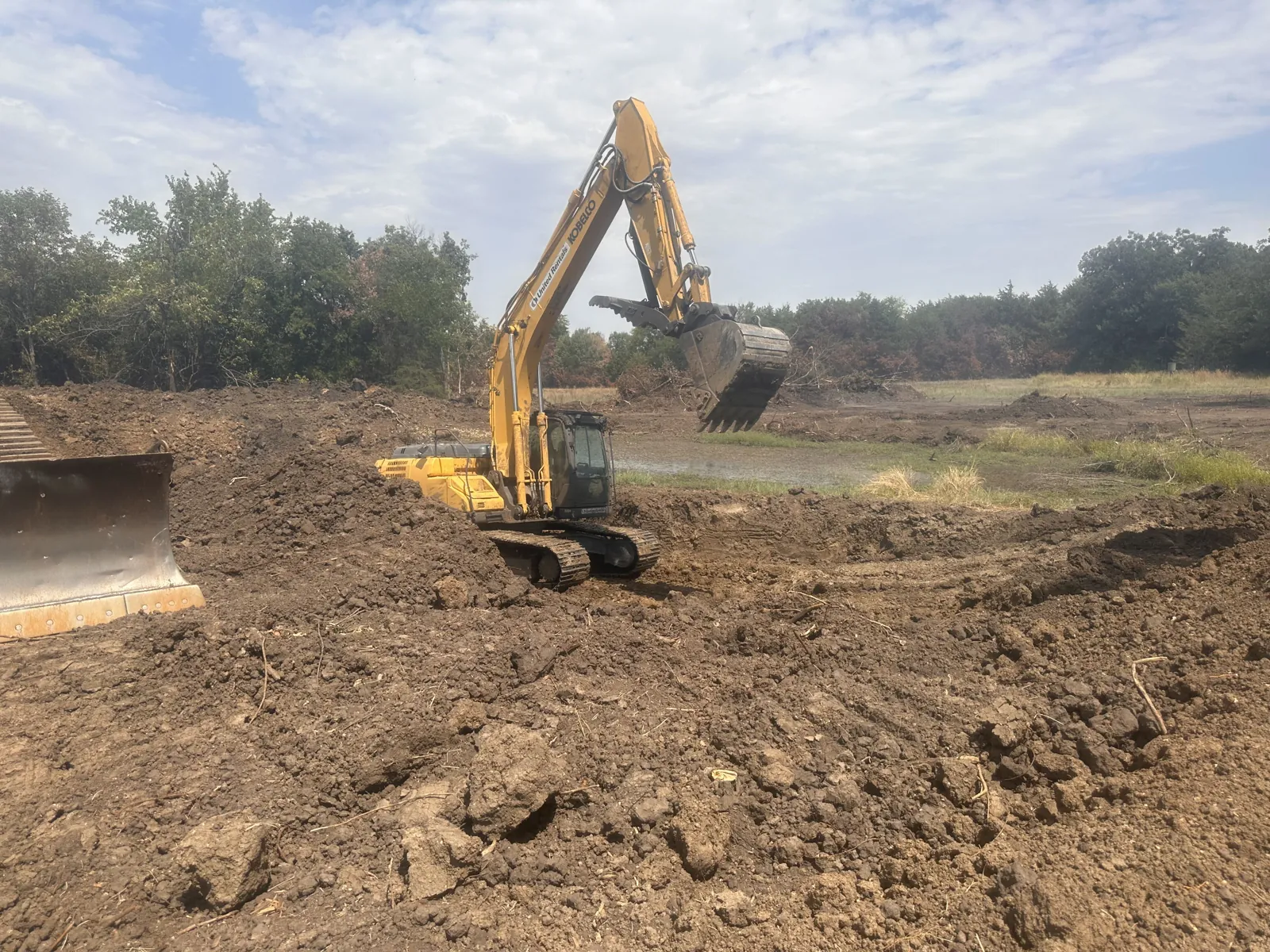
Shelter makers publish the hole they need. One maker lists a 10 foot wide by 12 foot long pit for an 8 person in-ground unit. A 20 person unit takes a 9 foot by 17 foot pit. Both stand 6 feet 1 inch tall, so the bottom has to come out flat and square.
Oklahoma law requires an OKIE811 locate before the bucket goes in. Notice runs at least 48 hours ahead of the dig. The day of the call, weekends and legal holidays do not count. The ticket stays good for 14 calendar days.
Ada sits in the Cross Timbers. The Oklahoma Geological Survey describes that ground as light colored and sandy with reddish subsoils. Sand cuts fast up top and the red clay underneath holds a clean wall, which makes for a good pit.
Water is the real issue below grade. ICC 500 makes the buried part of a shelter resist buoyancy. The standard assumes groundwater sits at the surface by the entrance unless drainage justifies a lower level. FEMA warns that heavy rain and a rising water table can push an unanchored shelter out.
A shelter dig turns out more dirt than most people plan for. We spread the leftover dirt around the unit, pack the backfill and rough grade the ground so a mower runs. FEMA recommends a sump pump inside and a surface graded to slope away from the door. Once the shelter is set, register it with the City of Ada and Pontotoc County Emergency Management.
Can you get help paying for a storm shelter in Oklahoma?
SoonerSafe is the state rebate, run by Oklahoma Emergency Management on FEMA hazard mitigation money. It pays a maximum of $3,000 per home. The rebate never exceeds 75 percent of what the safe room actually cost.
SoonerSafe picks recipients by random drawing, so registering early does not improve your odds. Homeowners have to register every year, and only one person per physical address may sign up. The check comes after the shelter is installed and the paperwork clears, which can take up to twelve weeks.
As of September 2026, the state’s page says the 2026 rebate program is not open at this time. The 2025 round gave priority to counties hit by 2024 disaster declarations. Pontotoc County was on that list.
The Chickasaw Nation seat of government is in Ada, and the Nation runs a Homeowner Preparedness Grant. It pays up to $5,000 toward preparedness work, storm shelters included. Chickasaw citizens who own and live in the home apply through the Housing Administration.
What standards does a storm shelter have to meet?
Two documents set the bar. FEMA P-361 is the federal guidance for community and residential safe rooms. ICC 500 is the Standard for the Design and Construction of Storm Shelters, and FEMA P-361 points to it.
FEMA calls a safe room a hardened structure built to give near absolute protection in extreme wind. Residential safe rooms built with FEMA funding must meet a 250 mile per hour design wind speed. That applies anywhere on the map. SoonerSafe wants it on paper, so the installer signs a certificate naming FEMA 320, FEMA 361 and ICC 500.
Above ground rates the same as below ground. FEMA states that a safe room meeting all of FEMA P-361 is as safe above grade as in the ground. ICC 500 caps the walk to the shelter door at 150 feet from the nearest entrance of the house. In a mapped flood hazard area, a below ground shelter will not qualify for FEMA money.
Does a storm shelter add value to your home?
FEMA’s homeowner guide says a safe room or storm shelter raises a home’s sale price by about 3.5 percent. That came to roughly $4,200 for a typical home in the study FEMA cites. The figure is national, not an Oklahoma appraisal.
The weather math is Oklahoma’s own. NWS Norman counts 4,518 tornadoes statewide from 1950 through 2025. That averages 59.4 a year, and May alone averages 24.4. Pontotoc County has recorded 74 since 1950.
On an ongoing ranch project near Sulphur we set a storm shelter and dug a swimming pool. We get the pit dug and backfilled and leave the ground graded. The shelter goes in and the yard closes back up. Call (580) 344-7473 for a free estimate on the dig.