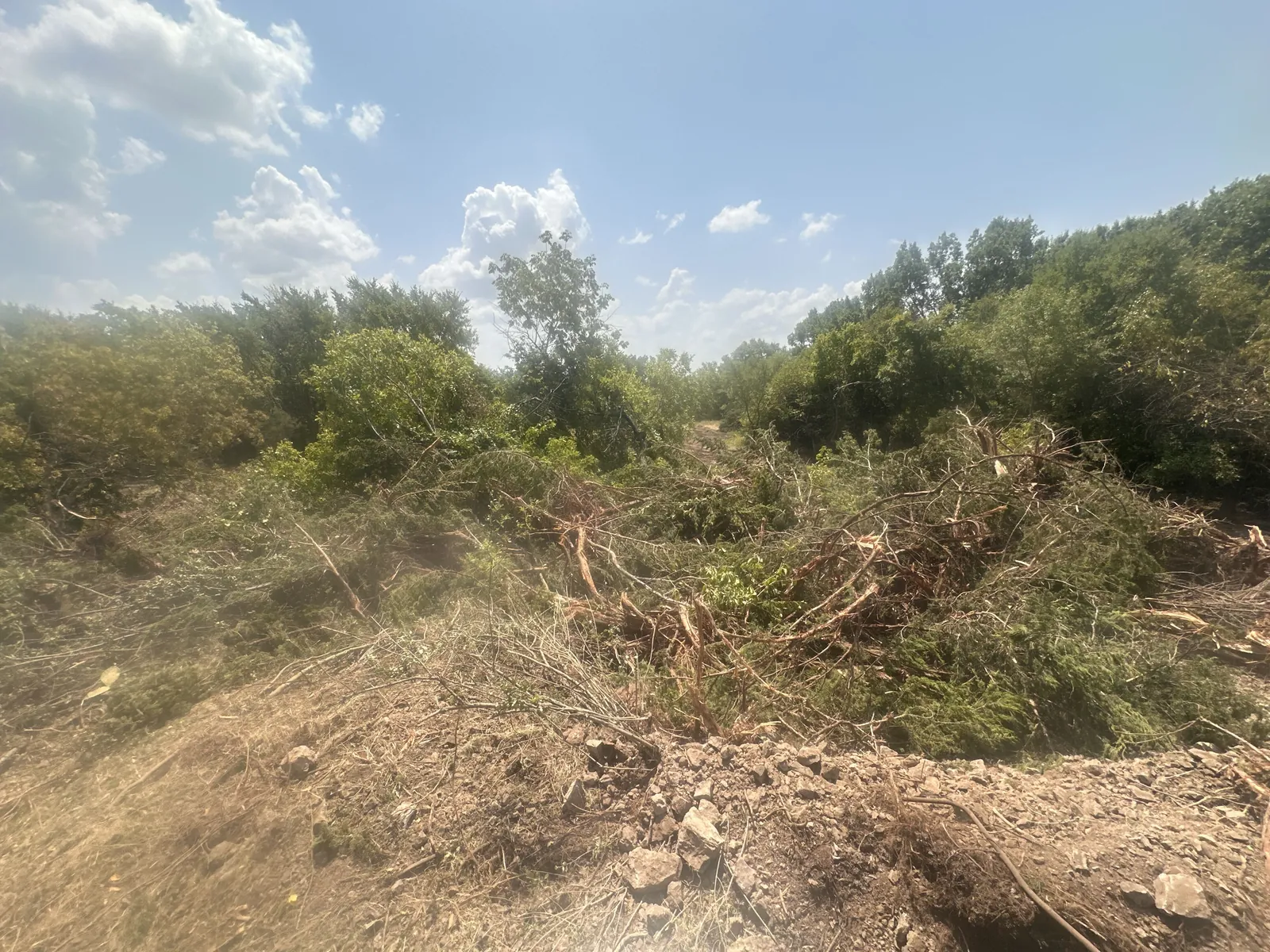
Dirt work in Norman almost always starts with water. The east half of Cleveland County sits in the Cross Timbers. Out there sandy loam lies over heavy red clay. That subsoil can run 40 to 60 percent clay and drains very slowly. Rain soaks through the sand until it hits that layer. Then it runs sideways across your ground instead of soaking in. On acreage that shows up as a soft yard or a washed out lane. We come up from Ada with a D6 dozer and a 30,000 pound excavator.
Norman covers about 178 square miles of land. Annexations in the 1960s pushed the city limits east past Lake Thunderbird to Little Axe. So a ten acre tract with cattle on it can still sit inside the city. Disturbing an acre or more there calls for an earth change permit. The city wants a sediment and erosion control plan with the application. That rule shapes how we scope heavy dirt work on rural tracts from day one. Call (580) 344-7473 and tell us where the water is going. Free estimates.
Tell us about your property and we'll get back to you fast.
The ground east of Norman is a two layer problem. The Newalla soil series has its type location right here in Cleveland County. Its surface is a fine sandy loam, easy to cut and easy to move. Below that the subsoil turns to clay, 40 to 60 percent clay by weight. USDA rates it very slowly permeable with very high runoff. Slopes run from 1 to 25 percent. So rain does not soak in evenly. Water perches on the clay and picks a path across the surface. That path becomes a rut. The rut becomes a gully that carries topsoil off the tract. Filling that gully with loose dirt just moves the washout to next spring.
So we reshape the ground instead of patching it. The excavator cuts a swale on contour and gives it real fall. The dozer carries that cut material to the low side and builds it up. On a homesite that means a crown near the house and a drop away from it. Where a gully has already cut through the clay, we bench the sides back. The new slope has to be flat enough to hold grass. Then we key the fill into the old channel so it cannot slip. The skid steer spreads topsoil over the shaped ground. After that we finish with grading and leveling to a smooth, drainable surface.
Lake Thunderbird holds the drinking water for Norman, Midwest City, and Del City. Oklahoma named it a Sensitive Water Supply in 2002. The state lists the lake as impaired, and turbidity is one reason. EPA approved a cleanup plan for it in 2013. There are no wastewater plants in that watershed. The sediment comes off construction sites and eroding stream banks. Sediment has taken thousands of acre feet of storage since the lake filled in 1965. So Norman takes erosion control seriously on an earth change permit. Disturb an acre or more inside the city and you need one. The application asks for your OKR10 authorization from DEQ and a stormwater plan.
On the ground, that changes the order of work. Sediment controls go in before the dozer starts moving material. We stage spoil piles away from the low side of the tract. Cut and fill gets balanced on site wherever the numbers allow. Hauling clay off a Cleveland County tract costs money and truck time. Most of that material has a better home on the property. It goes under a driveway lane or into a pond dam. Some of it ends up under a rough building pad brought level to grade. We rough the pad and leave it concrete ready. The concrete itself is somebody else's trade. Outside the city limits the rules change, so check with Cleveland County first.
More about the service itself is on our Dirt Work page, and everything we do around town is on the Norman service-area page.
Answers specific to dirt work work around Norman. Something else on your mind? Call us.
Cedar taking the pasture, a pad to build, an old house to take down, or a pond you have been thinking about for years? Call or send the form. We come look at the property with you, and the estimate is free, from the owner who runs the machines.
Tell us about your property and we'll get back to you fast.