Dirt work in Ardmore changes with the ground under it. The Arbuckle Mountains sit about nine miles north of town. Work that direction and the soil turns shallow and steep, with rock at the surface. Drop down toward Caddo Creek or Hickory Creek and you get deep loam on old flood plain. Same county, two different jobs. We run a Cat D6 dozer, a 30,000-pound excavator, and a tracked skid steer out of Ada. Which side of that line your dirt sits on changes the whole job.
Ardmore sits about 60 miles south of Ada, at the far edge of what we cover. Moving a D6 and an excavator that far costs real money. So the price works best when one trip covers the whole job. Cutting a pad and the road into it on the same mobilization beats two visits. Most acreage down here sits off US-70, SH-199, and out toward Lake Murray. Call (580) 344-7473 for a free estimate. We come look at the ground first, then give you a number.
Tell us about your property and we'll get back to you fast.
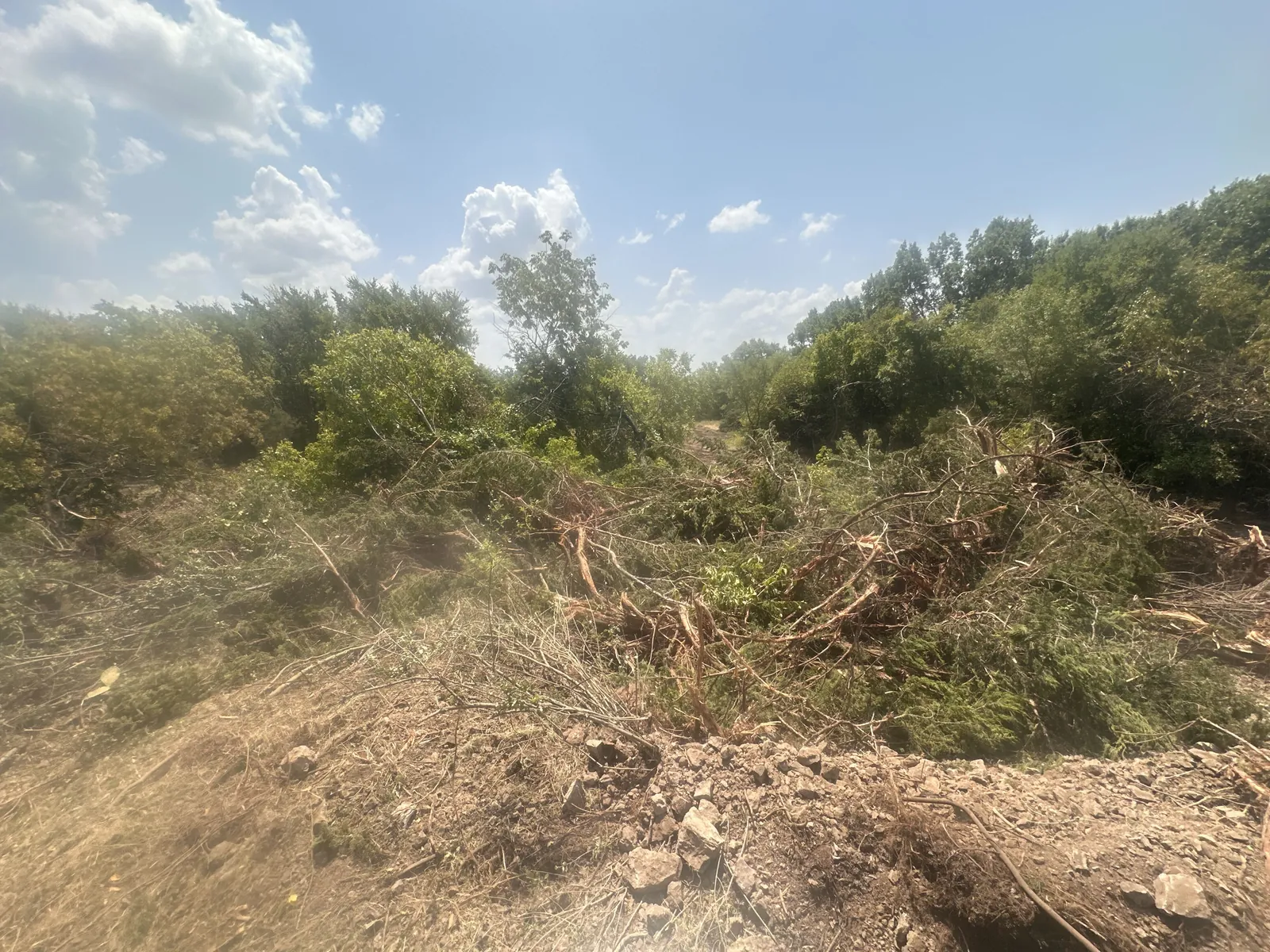
Carter County covers about 833 square miles, and it sits across four different land regions. They run from the Arbuckle Mountains down to the Coastal Plains. Head north and west of Ardmore toward the foothills and the soil turns very shallow. You get steep slopes and rock outcrops near the surface. A dozer blade finds stone there before it finds two feet of topsoil. Cuts mean ripping and pulling rock instead of pushing loose dirt. That slows the machine and changes how much material a day of work actually moves. We check depth to rock early. It decides whether we cut into the hill or build the pad up with fill from a flatter spot.
The creek bottoms are the other half of the story. Caddo Creek and Hickory Creek flank Ardmore, and the flood plains along them carry deep loamy soil. That dirt cuts easy and shapes clean. It also holds water and settles under load. It moves when the rain comes hard. A pad on bottom ground needs fill placed in lifts and packed down. The water has to be routed around it before anything else goes in. Runoff off the hills ends up in those bottoms. A lot of the grading and leveling here fixes a pad that got shaped once and never drained. The fix is slope and a place for water to go.
Cattle and forage run this county. Carter County holds about 373,000 acres of farmland, and 214,000 acres of that is permanent pasture or native range. Forages and beef cattle lead the local ag economy, with pecans behind them. That is the ground most Ardmore dirt work happens on. You need an entrance off the county road that holds a loaded gooseneck. You need a two-track turned into a road that stops washing out every spring. You need a pasture shaped so the low corner drains instead of staying boggy. You need a level pad for a hay barn or a shop. That is the heavy dirt work a D6 and a 30,000-pound excavator are built for.
Ardmore is more than ranch country now. Michelin runs a plant here with around 1,900 workers. A refinery and the industrial airpark sit on the west side near I-35. That work pulls people onto acreage outside the city limits. Those home sites need a pad cut and a driveway that holds through a wet spring. Water is the through line on almost every job down here. On ranch ground the same trip often adds pond construction. A dug pond gives the dirt from your cut somewhere useful to go. Oklahoma DEQ requires stormwater permit coverage once a site disturbs an acre or more. Inside the city limits, check with Ardmore's Community Development office before a pad goes in.
More about the service itself is on our Dirt Work page, and everything we do around town is on the Ardmore service-area page.
Answers specific to dirt work work around Ardmore. Something else on your mind? Call us.
Cedar taking the pasture, a pad to build, an old house to take down, or a pond you have been thinking about for years? Call or send the form. We come look at the property with you, and the estimate is free, from the owner who runs the machines.
Tell us about your property and we'll get back to you fast.