
Forestry Mulching vs Dozer Land Clearing: Which Is Right for Your Property?
Forestry mulching and dozer clearing are not two versions of the same service. Mulching grinds everything above the ground into chips and leaves the roots. Dozer clearing takes the whole tree out, roots included. The right choice depends on what the land is for, and the wrong one usually costs a second mobilization to fix.
We should say where we stand up front: we clear mechanically, with a dozer and an excavator, and part of our regular work is cleaning up behind mulching jobs. This post plays it straight anyway, because mulching genuinely is the right call for some ground.
What does each method actually do?
Range management research draws the line cleanly. Grubbing, which severs roots below ground, is generally effective at killing resprouting brush. Mowing and grinding disturb the soil less but do not necessarily kill the plant. Mulching is a grinding method: a drum head turns standing growth into chips, reaching trees up to about 14 inches in diameter and cutting roughly 2 inches below grade at most. The root ball never leaves the ground.
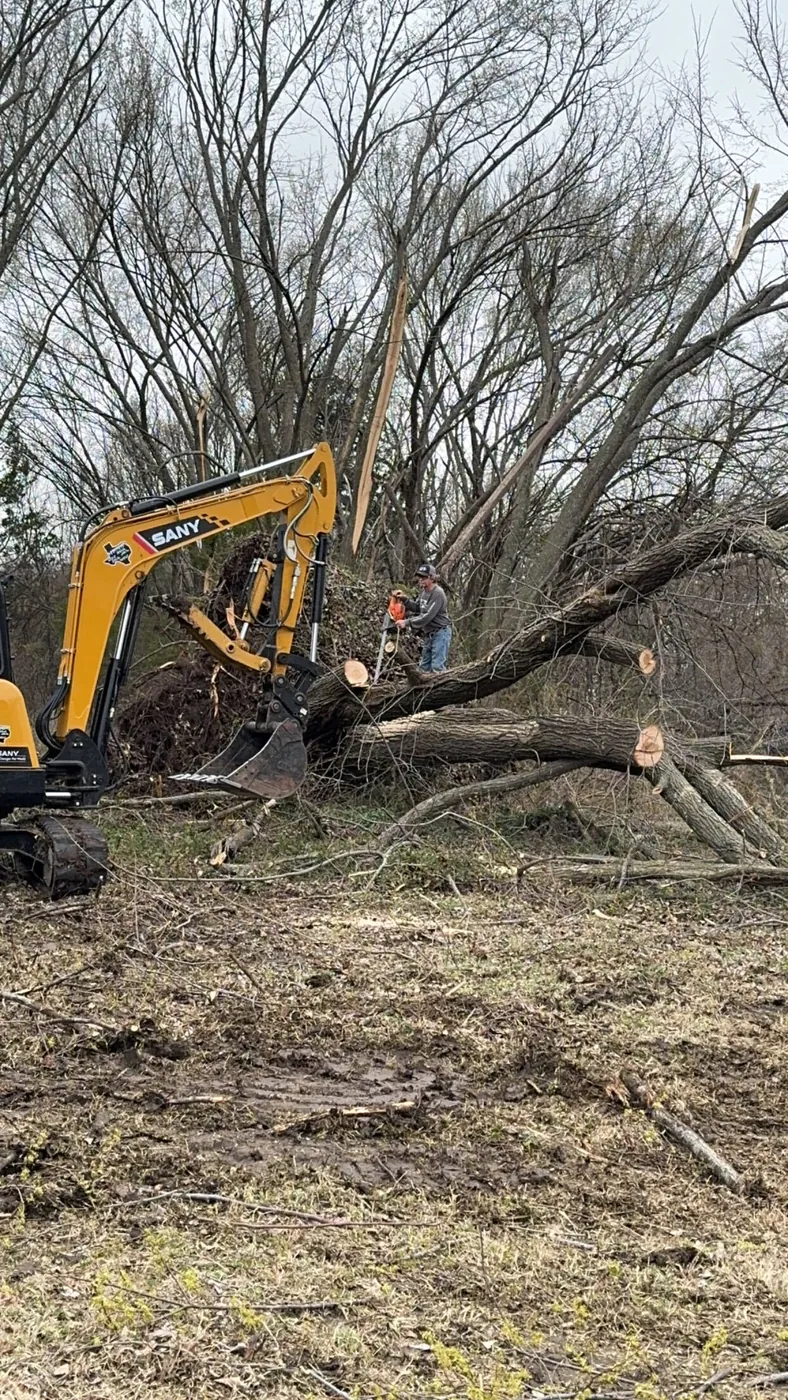
Dozer clearing works the other way. The blade pushes the tree over, the excavator lifts the stump with the roots attached, and the debris gets piled to burn or hauled off. What is left is bare dirt that can be graded, seeded, fenced or built on.
What does each one cost in Oklahoma?
| Method | Typical Oklahoma range per acre | What is included |
|---|---|---|
| Forestry mulching, light brush | $500 – $1,500 | Grinding in place, chips left as cover |
| Forestry mulching, dense growth | $1,800 – $5,000 | Slower grinding, big stems cut separately |
| Dozer clearing with stumps out | $1,500 – $4,000 | Stump removal, piling, rough grade |
| Stump removal after mulching | $100 – $400 per stump | The second trip, if the land’s use changes |
Mulching usually wins on day-one price. The full-picture math depends on what happens next. Land headed for a building pad, a fence line or regular mowing needs the stumps out eventually, and digging them after a mulcher has been through costs more than taking them with the tree the first time.
When is mulching the right call?
Honest answer: often. Mulching fits when the ground stays wild and the roots do not matter.
- Trails, shooting lanes and understory thinning on hunting land.
- Light brush knocked back for looks or access, where regrowth is acceptable.
- Erosion-sensitive slopes, since the chip layer protects bare soil. Federal conservation practice standards use mulch for exactly that.
- Cedar. This one surprises people: Eastern Red Cedar does not resprout when cut, so mulching kills cedar as dead as pulling it does. On pure cedar where nobody will ever mow or build, mulching is a fair option.
When is dozer clearing the right call?
When the land has a job to do afterward.
- Building sites. Code requires vegetation, topsoil and organic material out of the foundation area, with fill compacted in lifts. A mulch mat and buried stumps fail that test before the first form gets set.
- Pasture going back to grass. Around Ada we are in the Cross Timbers, and its two signature trees, post oak and blackjack oak, sprout vigorously from the root crown after cutting. Forest Service data shows most top-killed blackjacks send up basal sprouts within a year. Grind them and they come back. Pull the root and they are gone.
- Persimmon and locust ground. Both sprout from roots and stumps, and persimmon forms thickets that get worse after cutting.
- Anywhere a mower will run. A shredder finding a hidden stump is how decks and driveline parts get replaced.
What does cleaning up after a mulching job involve?
We get these calls a season or two after the mulcher leaves. The land looked clean, then the sprouts came up and the mower found the first stump. The fix is the job that was skipped: the excavator pulls each stump and root ball, buried wood comes out of the top layer, and the ground gets a rough grade so it mows.
None of that makes mulching a scam. It makes it a top-removal method being asked to do a root-removal job. Match the method to what the land is for and either one can be the right money.
If your ground is headed for grass, a pad or a fence line, call (580) 344-7473. We will look at what is standing, tell you honestly which method fits, and give you a free estimate either way.