
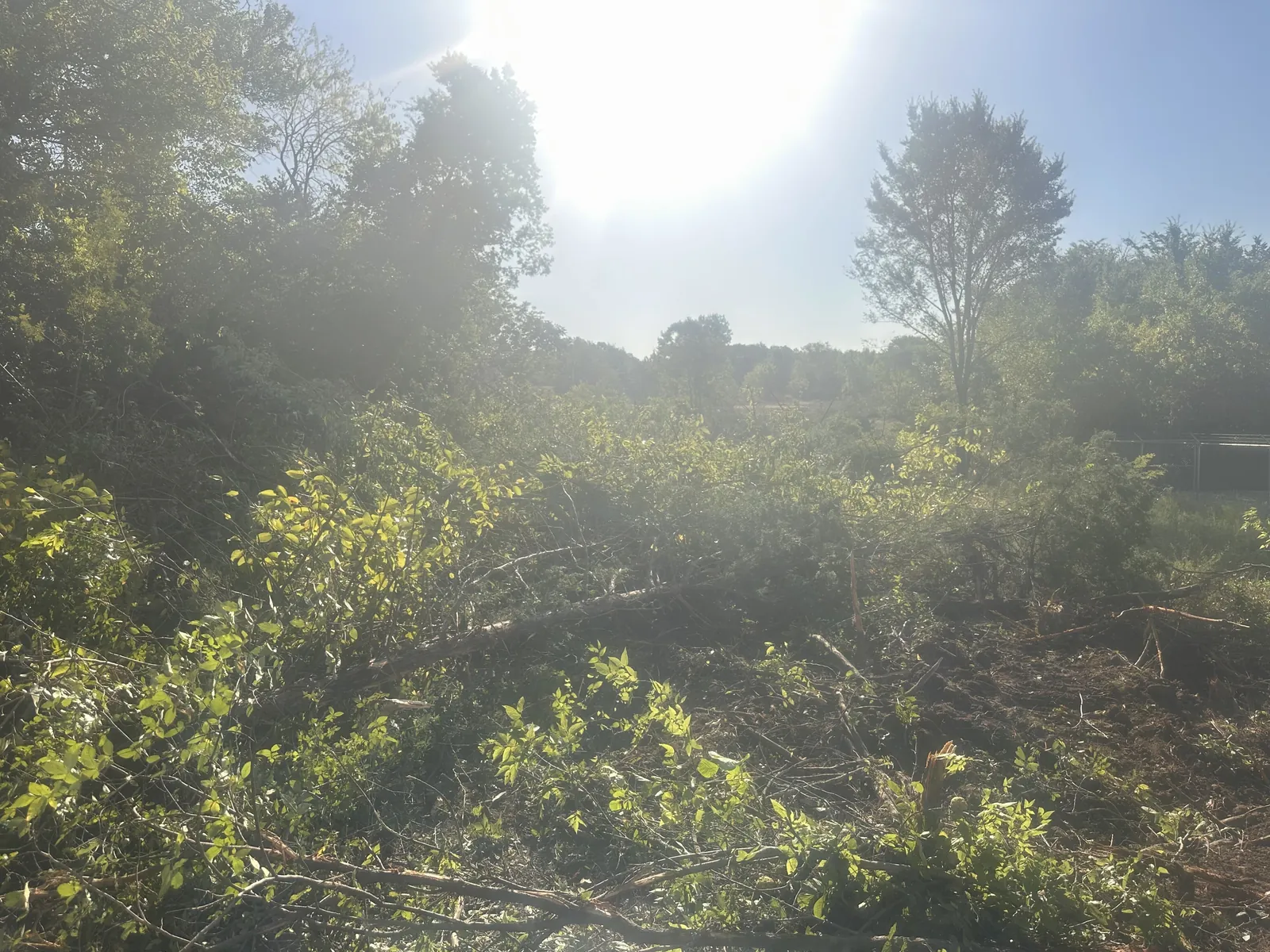
What Does Cedar Removal Cost in Oklahoma?
Cedar removal in Oklahoma runs from about $500 an acre for scattered trees to $6,000 an acre for closed-canopy thickets, with most mechanical jobs in between. A single yard cedar removed as a tree job averages about $383. And unlike nearly every other tree on your place, one correct cut kills a cedar forever.
We do this work with a dozer and an excavator, roots and all, and our cedar removal service includes a 140-acre USDA contract in the ledger. Here is the full money picture, including the programs that help pay for it.
What does cedar clearing cost per acre?
| Situation | Typical Oklahoma range |
|---|---|
| Scattered cedar on open pasture | $500 – $1,500 per acre |
| Moderate stands, mixed sizes | $1,500 – $3,000 per acre |
| Dense, closed-canopy cedar | $3,000 – $6,000+ per acre |
| Single standing cedar, under 30 ft | ~$383 average per tree |
| Machine time | ~$150 per hour |
Density is the whole story. A machine rolling through scattered trees covers acres a day; a thicket where canopies touch is slow, heavy work. Per-acre prices also fall as tracts grow, because moving equipment costs the same for five acres as fifty. One caution from inside the trade: rock-bottom advertised rates describe light brush on flat ground, and crews quoting them on heavy cedar either raise the price on site or cut corners.
The biggest ROI argument is not the clearing price but the grass. Extension-circulated figures put forage loss at about 400 pounds per acre for every 10 percent of cedar cover. Worked out on a productive 80 acres, that is the difference between carrying 8 cows and carrying 2.
What actually kills a cedar
Eastern Red Cedar does not resprout. Cut it below the lowest live branch and it is dead, no stump treatment, no chemicals, no regrowth. OSU and the Noble Research Institute both state it plainly, and it makes cedar the rare clearing job with a permanent result.
Two honest nuances ride along. First, the cut has to be low; a live limb left on the stump keeps the tree alive. Second, a dead cedar lying where it fell still covers about 70 percent of the ground it covered standing, so “cut and leave” trades a water thief for an obstacle course. That is why our version of the job takes the root ball too and deals with the debris, leaving ground that mows and grazes.
The water numbers deserve their correction. The famous claim is 30 gallons a day per tree; OSU’s sap-flow study measured an average near 6 gallons, peaking around 42 on a hot day for a 12-inch tree. The honest figure is smaller and still adds up to a pond’s worth across a thicket.
Can you get help paying for it?
Two real programs exist, and the fine print matters more than the headlines.
NRCS EQIP is the year-round federal path. You start at your local USDA Service Center, where technical help is free, bring a tax ID and proof of control of the land, get a farm number from FSA, and your application gets ranked in periodic funding batches. Payment comes after the work passes inspection. One piece of NRCS’s own guidance worth stealing: treat the low-density edges first, because thin stands give the biggest return per dollar.
The Oklahoma Conservation Commission’s Invasive Woody Species program is the state path: up to $50,000 per landowner per fiscal year, no minimum acreage, applied through participating conservation districts. Know three things before counting on it. Applications were closed as of late summer 2026, pending word on the next round. County eligibility varies by round, so ask your own conservation district whether it is in. And starting work before approval can make the ground ineligible, so the sequence is paperwork first, dozer second. The same ground also cannot stack this program with another brush-management contract.
Why cedar took your pasture in the first place
Cedar is native here, and for thousands of years fire kept it confined to canyons and rocky ground where flames could not reach. Suppress the fire, and the tree walks: NRCS pegs the spread at roughly 762 acres of Oklahoma a day. Birds perch on fences and drop seed, which is why fence lines fill in first, and a tree gains about a foot of height a year until hand tools stop being an option.
The maintenance truth belongs in every plan: clear it once and light regrowth returns from seed within years unless grazing management or prescribed fire holds the ground. Clearing is the reset button, not the whole game.
If cedar is taking your place, call (580) 344-7473. We will look at the density, talk through whether a cost-share path fits your county, and put a free, real number on getting your grass back.